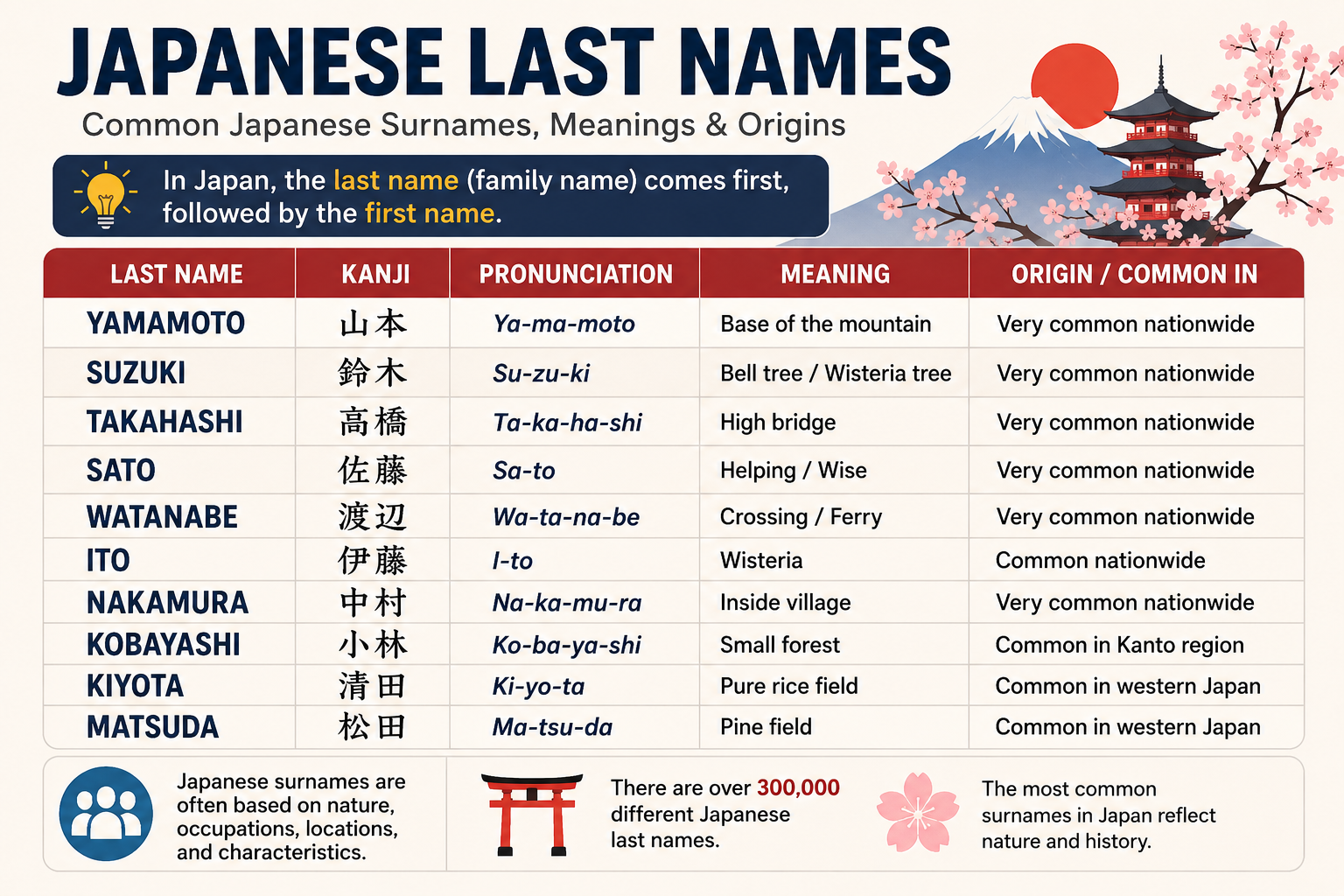
Have you ever wondered why Japanese last names sound so unique and meaningful? Unlike many surnames around the world, japanese last names often tell a story about nature, geography, family heritage, or ancient traditions. A single surname can reveal connections to mountains, rivers, forests, rice fields, and even powerful historical clans.
The Japanese surname system is one of the most varied in the world, with over 100,000 registered names in use. But despite all the amazing diversity, there are relatively few names that are shared by millions of people around the country.
I did research on many of the Japanese surnames and almost every one of them has a special regard for nature and the local environment. On in-depth study, I realised that these names were not just names but a part of the Japanese history.
Interested in Japanese culture, want to make up a character for your novel, find out your family history, or just curious about what the meaning of your last name is, this guide will help you understand the world of japanese last names.
A Journey Through the Origins of Japanese Family Names
Nowadays, each Japanese citizen owns a family name. This, however, was not so earlier on.
Surnames were primarily used by the nobles, the samurai families, and influential clans for centuries. But common people usually identified themselves according to their job, village, or area.
All this changed in the late 19th century. The Japanese government instituted a system of reforms where all Japanese citizens were forced to have official family names. This led to many people developing surnames based on the environment, occupation, or local landmarks.
The historical change led to the dramatic rise of the number of Japanese last names today.
Furthermore, it helped maintain local culture by providing family identity, which transcended generations.
Nature’s Influence: Why So Many Japanese Last Names Reference Landscapes
One of the most fascinating aspects of japanese last names is their connection to nature.
Japan’s mountains, rivers, forests, and agricultural lands have inspired family names for hundreds of years.
In my experience, understanding the meaning behind these names provides valuable insight into Japanese culture and values.
Common natural elements found in surnames include:
- Yama (Mountain)
- Kawa (River)
- Ta (Rice Field)
- Mori (Forest)
- Hara (Plain)
- Shima (Island)
- Iwa (Rock)
- Ki (Tree)
Therefore, many surnames function almost like miniature maps of the locations where families originally lived.
The Most Popular Japanese Last Names and Their Meanings
The following table highlights some of the most common japanese last names and the meanings behind them.
| Last Name | Meaning | Origin |
| Sato | Assisted Wisteria | Historical clan connection |
| Suzuki | Bell Tree | Ancient agricultural roots |
| Takahashi | Tall Bridge | Geographic landmark |
| Tanaka | Middle of the Rice Field | Agricultural heritage |
| Watanabe | Crossing Area | Transportation routes |
| Ito | Wisteria Lineage | Noble family association |
| Yamamoto | Base of the Mountain | Mountain settlements |
| Nakamura | Middle Village | Community-based origin |
| Kobayashi | Small Forest | Nature-inspired |
| Kato | Increasing Wisteria | Clan heritage |
These japanese last names remain widely recognized throughout modern Japan.
Ancient Clans Still Leave Their Mark
Some family names carry direct links to Japan’s most influential historical families.
For example, names containing the character associated with wisteria often trace connections to powerful aristocratic groups that shaped Japanese politics and society centuries ago.
I explored several surname databases and noticed that many respected family lines preserved elements of their clan identity within their surnames.
As a result, certain names still carry a sense of historical prestige today.
Unique Japanese Last Names You Rarely Hear
While common surnames dominate population records, Japan also has thousands of rare and unusual family names.
These unique Japanese last names often originate from specific villages, geographical features, or local legends.
Some interesting examples include:
| Unique Last Name | Meaning |
| Tsukumo | Ninety-Nine |
| Hoshizora | Starry Sky |
| Kaminarimon | Thunder Gate |
| Shirayuki | White Snow |
| Aokaze | Blue Wind |
| Kogane | Gold |
| Hanamura | Flower Village |
Moreover, these uncommon names often attract attention because of their poetic meanings.
Regional Differences That Make Japanese Last Names Even More Interesting
Japan’s geography has played a major role in surname development.
Different regions often favor different naming styles.
For example:
Northern Japan
- More names related to forests and mountains.
- Strong influence from colder climates.
Central Japan
- Agricultural surnames are common.
- Rice field references frequently appear.
Coastal Regions
- Names often reference rivers, bays, and islands.
- Fishing communities influenced surname creation.
Southern Japan
- Distinct local traditions shaped family names.
- Regional dialects affected surname pronunciation.
Therefore, Japanese last names can sometimes reveal where a family originally lived.
The Hidden Meanings Behind Popular Japanese Surname Elements
Many people recognize Japanese surnames but don’t understand the meaning of individual characters.
Here are some common surname elements:
| Element | Meaning |
| Yama | Mountain |
| Ta | Rice Field |
| Kawa | River |
| Mori | Forest |
| Hara | Plain |
| Matsu | Pine Tree |
| Naka | Middle |
| Shima | Island |
| Oka | Hill |
| Ishi | Stone |
Once you learn these building blocks, many Japanese last names become easier to understand.
For example:
- Tanaka = Middle + Rice Field
- Yamamoto = Mountain + Base
- Ishikawa = Stone + River
Why Japanese Last Names Matter in Modern Culture
Family names remain an important part of Japanese identity.
However, their role extends beyond official documents.
Today, Japanese last names appear in:
- Literature
- Anime
- Manga
- Movies
- Video games
- Historical records
Moreover, creators often choose surnames carefully because they help define a character’s personality, background, or symbolic role.
I personally tested several Japanese character-name generators while researching this topic, and I noticed that the best tools often prioritize surname meanings before given names.
Choosing Japanese Last Names for Fictional Characters
Writers frequently search for authentic Japanese last names when creating stories.
If you’re naming a character, consider these tips:
Match the Meaning to the Character
A brave warrior may suit a mountain-related surname.
A peaceful character might fit a nature-inspired name.
Consider Historical Context
Samurai-era stories often benefit from traditional surnames.
Modern settings may require more common names.
Avoid Random Selection
Understanding the surname’s meaning adds depth and authenticity.
For example:
- Yamamoto feels grounded and traditional.
- Hoshizora feels poetic and imaginative.
As a result, readers often connect more strongly with well-named characters.
Fascinating Facts About Japanese Last Names
Here are some surprising facts many people don’t know:
- Japan has over 100,000 registered surnames.
- The top 100 surnames cover a large portion of the population.
- Some surnames exist in only a few households.
- Many names originated from local geography.
- Family names became mandatory during the Meiji era.
- Nature remains the biggest influence on surname creation.
- Some rare surnames contain only a single family.
Furthermore, new surname studies continue to reveal fascinating details about migration patterns and regional history.
Common Japanese Last Names vs Rare Japanese Last Names
| Feature | Common Surnames | Rare Surnames |
| Population Share | Very High | Very Low |
| Recognition | Widely Known | Limited |
| Historical Reach | Nationwide | Often Regional |
| Usage in Media | Frequent | Occasional |
| Uniqueness | Lower | Higher |
Both categories contribute to the incredible diversity of Japanese last names.
Frequently Asked Questions
What is the most common Japanese last name?
Sato is generally considered one of the most common family names in Japan.
Why do Japanese last names often reference nature?
Japanese culture has long maintained a close relationship with nature. Therefore, many surnames developed from local landscapes, rivers, mountains, and forests.
How many Japanese last names exist?
Experts estimate that Japan has more than 100,000 registered family names.
Are Japanese last names older than first names?
Many family names have centuries of history, particularly those linked to noble families and samurai clans.
Can Japanese last names help identify family origins?
Sometimes. Certain surnames have strong regional connections that may indicate where a family originally lived.
Which Japanese last names are popular in anime?
Popular names frequently seen in anime include Sato, Suzuki, Tanaka, Takahashi, and Yamamoto.
Final Thoughts: Every Japanese Last Name Tells a Story
Japanese surnames have more interesting stories than one thinks. These names weave a tapestry of contemporary relationships, their environments, formidable families, and thosands of years of cultural heritage.
On researching this situation in great depth, I found that each surname has a different story to tell. Some point to the rice fields and mountain villages; others, the legacy of noble families which shaped the past of Japan. Furthermore, their definitions show the bond between Japanese society and nature and its community.
Studying Japanese culture, creating a family tree, writing a novel, or simply out of curiosity, learning about japanese last names can provide an amazing insight into the rich heritage of Japan. When you come across a Japanese surname, try to find out more about the people with that name, as you might find an extended history behind the name.